
Multi-Asset Insights
In a nutshell
- Markets are driven not only by fundamentals but by shared narratives that shape attention, interpretation of news and capital flows, until events expose their limits.
- Gold’s recent drawdown fits a long history of large cyclical swings, reinforcing that it is a volatile, narrative driven reserve asset rather than a guaranteed short term safe haven.
- The US dollar’s reserve status rests on powerful financial and military pillars, which are being questioned at the margin as warfare evolves, making diversification – including into gold and other currencies – more credible.
- The shift from “just in time” to “just in case” is turning resilience, stockpiling and strategic inventories into structural drivers of commodities and real assets, with implications for carry, term structures and portfolio construction.
Shifting plates of structural themes
In today’s market, the dominant narrative is often the real risk factor: it dictates where capital chases returns, how quickly shocks are priced, and when crowded trades finally unwind.
Stories are important for markets. While fundamentals underpin some moves, markets are often shaped by narratives and the reaction of market participants to those narratives.
Narratives influence what investors focus on, how they interpret new information, and where capital flows. When a narrative is widely shared, it can become self reinforcing – until events expose its limits and the market is forced to reprice.
In markets today, there are several long held narratives that are being tested. Three stand out: gold’s role as a safe haven, the durability of the US dollar’s reserve status, and the shift from “just-in-time” to “just-in-case” supply chains. The common thread is not that these narratives are disappearing, but that markets are reassessing when – and how reliably – they hold.
Is gold a risky asset?
Gold is perhaps the archetypal narrative asset. Its value is heavily influenced by market sentiment – the social construct that gold is valuable – rather than any tangible valuation anchors such as cash flows or earnings streams.
Traditionally, the main narratives that underpinned the value of gold were its safe haven status and inflation protection qualities. However, peak to trough declines this year of over 20 per cent following the outbreak of the war in Iran have tested some of the foundations that underlie gold’s narrative.
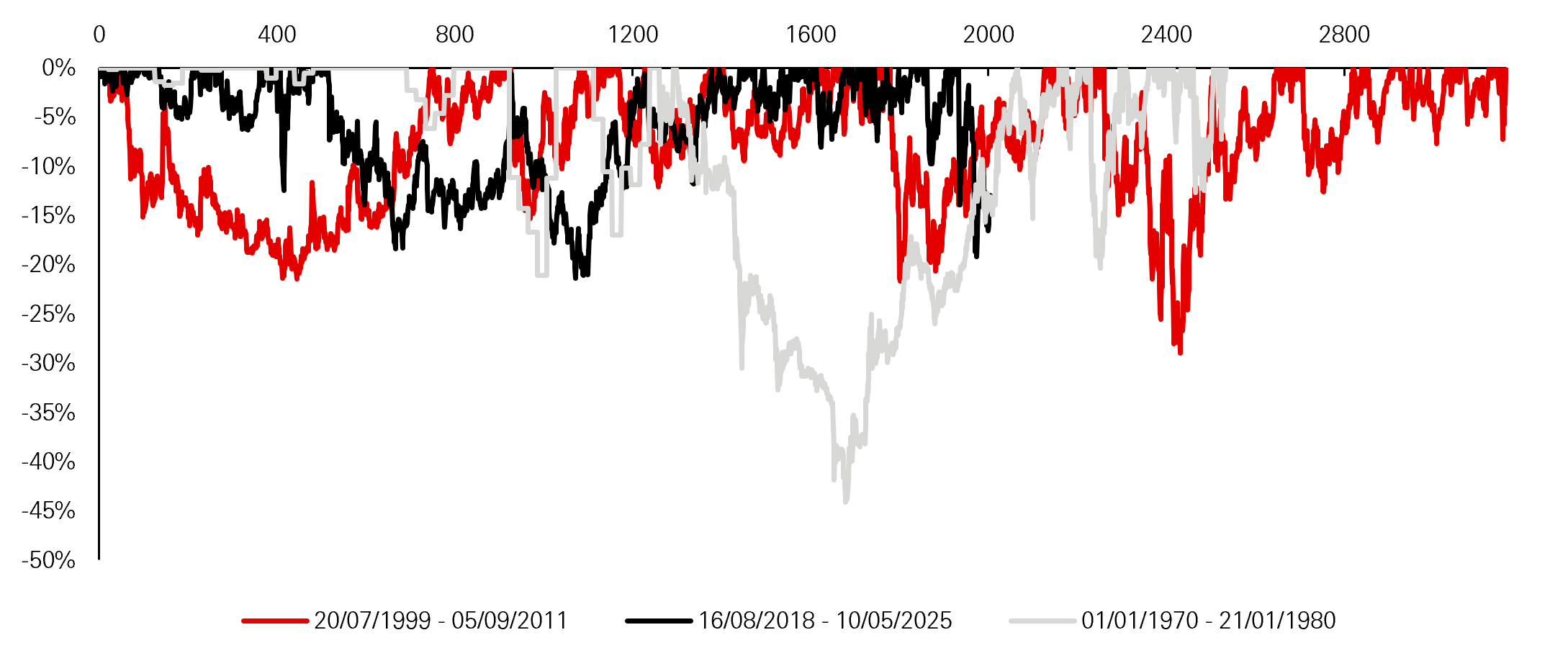
Over the last half-century, however, gold’s market behaviour has often resembled that of a cyclical risk asset. The three major secular bull markets in gold over this period all featured multiple drawdowns of more than 20 per cent, including episodes of 30-40 per cent declines such as during the global financial crisis. Recent weakness is therefore not unusual in a historical context and does not, by itself, signal a structural break in the gold market.
Figure 1: Gold drawdowns during bull markets
Click the image to enlarge
Source: Bloomberg, HSBC AM, data as of May 2026.
Gold’s performance around major equity and macro shocks has been mixed. During the dotcom bubble, it initially fell alongside equities before later establishing a more durable uptrend. In 2008, it eventually recovered and moved higher, but only after a significant drawdown. At the onset of the pandemic, gold rose early, then stalled and traded sideways for several years. Moreover, correlations with equities and the US dollar have been unstable across these episodes. That makes gold a useful long-term store of value but complicates its role as a dependable and systematic short-term hedge in every risk-off episode.
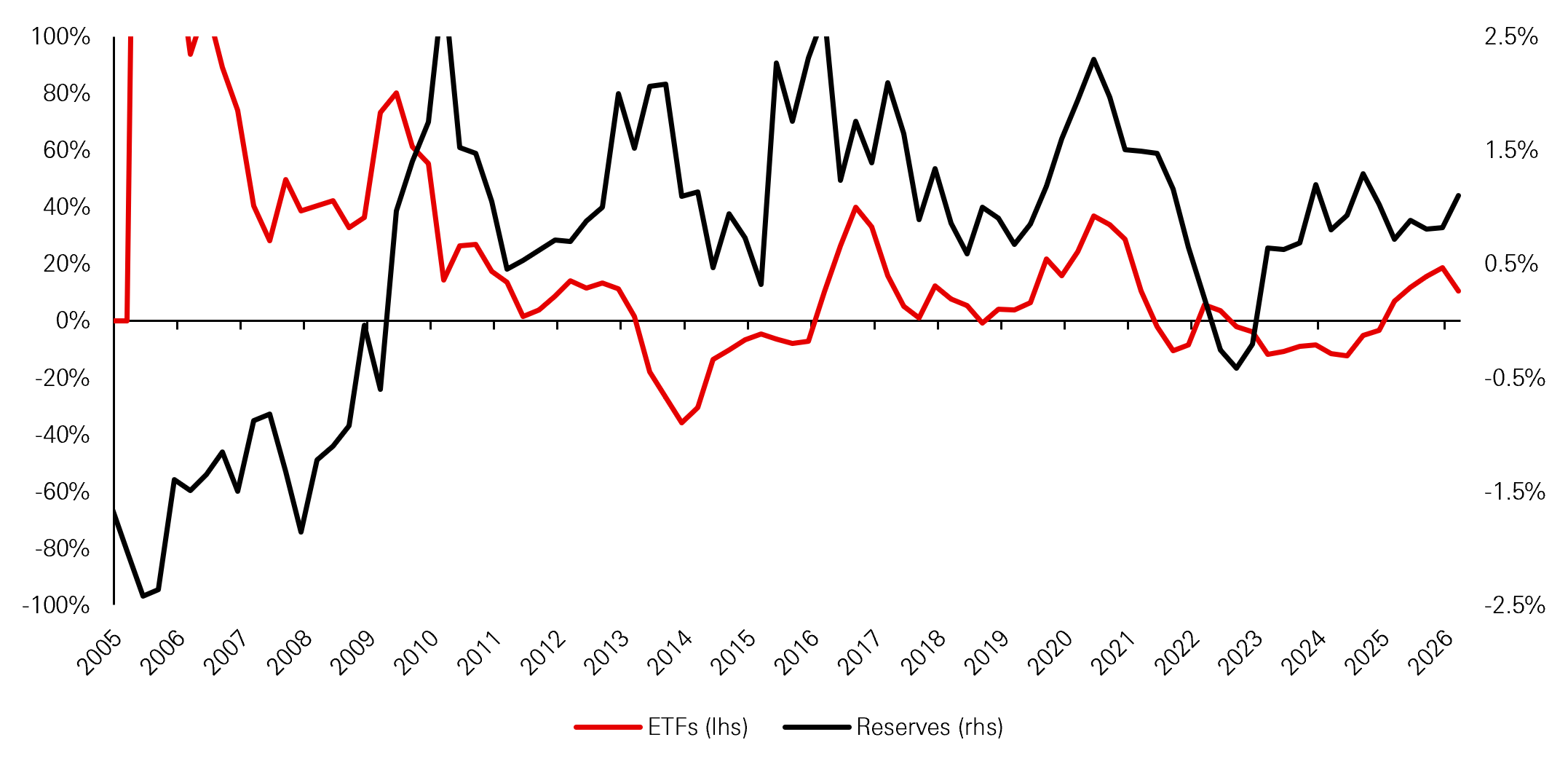
Figure 2: Gold holdings year on year (per cent)
Click the image to enlarge
Source: Bloomberg, HSBC AM, data as of May 2026.
Central banks’ ongoing purchases of gold have reinforced another key narrative that underpins gold: a reserve asset outside the dollar system. This feature has grown in importance in a world where concerns about currency debasement, geopolitical fragmentation and the long-term role of the US dollar remain open debates. Gold still carries an insurance value that is difficult to replicate through conventional financial assets.
The better way to think about gold is therefore not as an unconditional safe haven, but as a narrative driven reserve asset with useful long-term diversification properties and meaningful short-term volatility.
Its key narratives remain intact: protection against debasement, geopolitical fragmentation and reserve diversification away from Treasuries.
In defence of the USD’s reserve status
Central banks’ increased gold buying reflects a resurgent de dollarisation narrative and the growing willingness to question whether the US dollar’s reserve currency status is as unassailable as it once seemed.
To understand the merits of the narrative, it is important to assess the two interlocking pillars of the dollar’s reserve status. The first is the financial pillar, reflecting the USD’s dominance in trade, deep dollar capital markets, and the credibility of the Federal Reserve as a central bank.
The other pillar is the military. The US navy guarantees safe global seaways and underpins a rules based international order. This aspect of the dollar’s reserve status is not actively thought about by investors but is deeply ingrained. However, the foundations of the military pillar are changing.
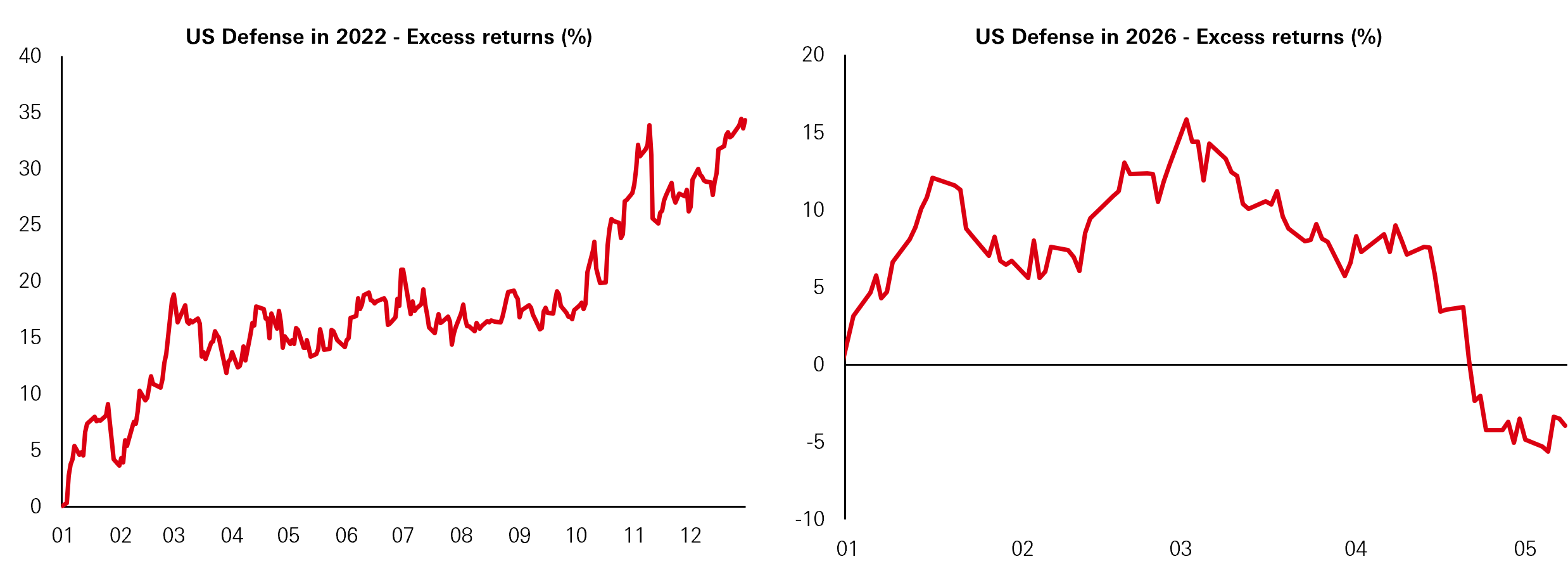
After the start of the Russia-Ukraine war in 2022, US and European defence stocks rallied, as investors concluded that defence spending will need to be prioritised, particularly in Europe. US defence stocks ended the year up 35 per cent and European stocks up 80 per cent.
The Russia-Ukraine war and this year’s Iran conflict have shown that warfare has evolved, and the existing US defence capabilities may not be as effective. Drone use has risen and Iran’s ability to block a key naval passage without F-35s, aircraft carriers, and Tomahawks have raised questions about the reliability of the US navy’s protection of seaways. While these concerns are unlikely to automatically dethrone the dollar, they do make reserve diversification (including gold) feel less theoretical and more like prudent insurance.
Figure 3: US defence stocks have wavered in 2026
Click the image to enlarge
Source: Bloomberg, HSBC AM, May 2026.
At the same time, it is important not to overstate the case. The dollar’s financial pillar remains formidable: liquidity, legal infrastructure, and the depth of US capital markets are not easily replicated. The narrative being tested is therefore not “the dollar is finished”, but “the dollar is unchallengeable”.
China and the USD counter-narrative
If the pillars of the USD’s dominance are showing some cracks, the Chinese renminbi has often been cited as its main challenger.
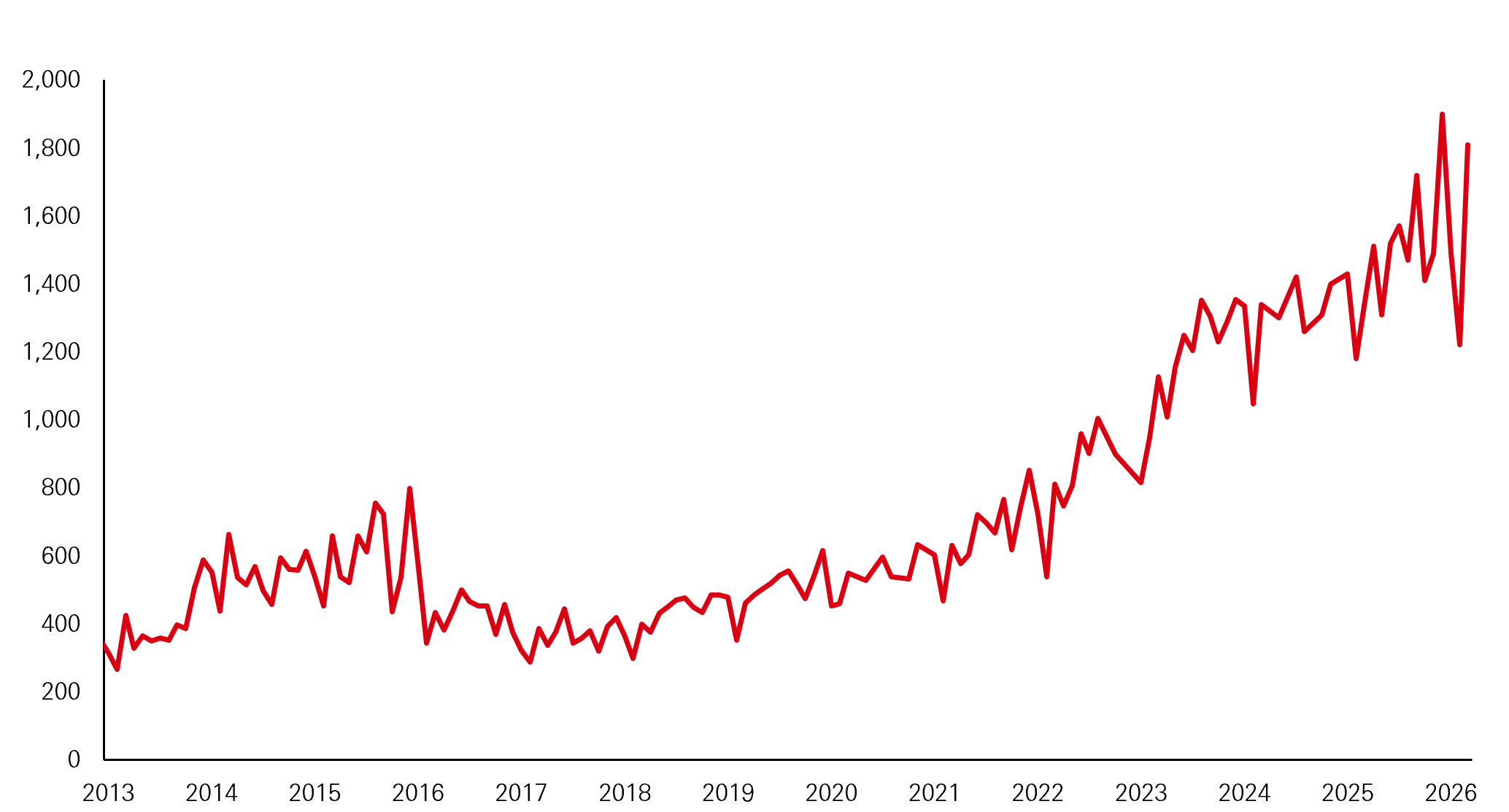
Here again, the narrative is subtle. The renminbi does not need to replace the dollar outright for the market to reprice the probability of a more multipolar settlement system. One of the more concrete signposts is the growth in cross-border settlements involving the renminbi, which have risen by over 300 per cent since 2013 (around 12 per cent CAGR), outpacing the growth of China’s total trade (around 4.6 per cent CAGR). In other words, trade linked to China is increasingly being settled in renminbi rather than being automatically dollarised.
Figure 4: Cross-border renminbi trade settlements have soared (bn CNY)
Click the image to enlarge
Source: Bloomberg, HSBC AM, data as of May 2026.
This is also why some investors feel a disconnect when they look only at SWIFT-based payment shares, where renminbi usage appears to have risen only modestly (from roughly 1.5-2 per cent to around 3 per cent). The narrative gap may simply reflect measurement: if more settlement is happening outside the channels investors watch most closely, the market can be late to recognise the shift.
Currency price action adds another layer to the narrative test. The renminbi’s trend has not always behaved as a textbook “risk-off” currency would, and recent episodes have challenged the assumption that geopolitical stress must mechanically translate into renminbi weakness. That doesn’t prove a regime change, but it does force investors to ask whether the old playbook is still the right one.
The practical implication is not that the renminbi is the new dollar, but that reserve managers and global corporates may increasingly treat currency choice as a strategic variable rather than a default.
From just-in-time to just-in-case
Another market narrative being tested is the just in time economy. This decade’s shocks – from the pandemic and the Russia Ukraine war to the closure of the Strait of Hormuz – have exposed how fragile global supply chains can be, particularly for critical commodities.
The transition from a just-in-time economy to a just-in-case economy is exemplified by the launch of Project Vault, the US government’s public-private partnership to build up strategic reserves of critical minerals, intended to build secure and resilient supply chains.
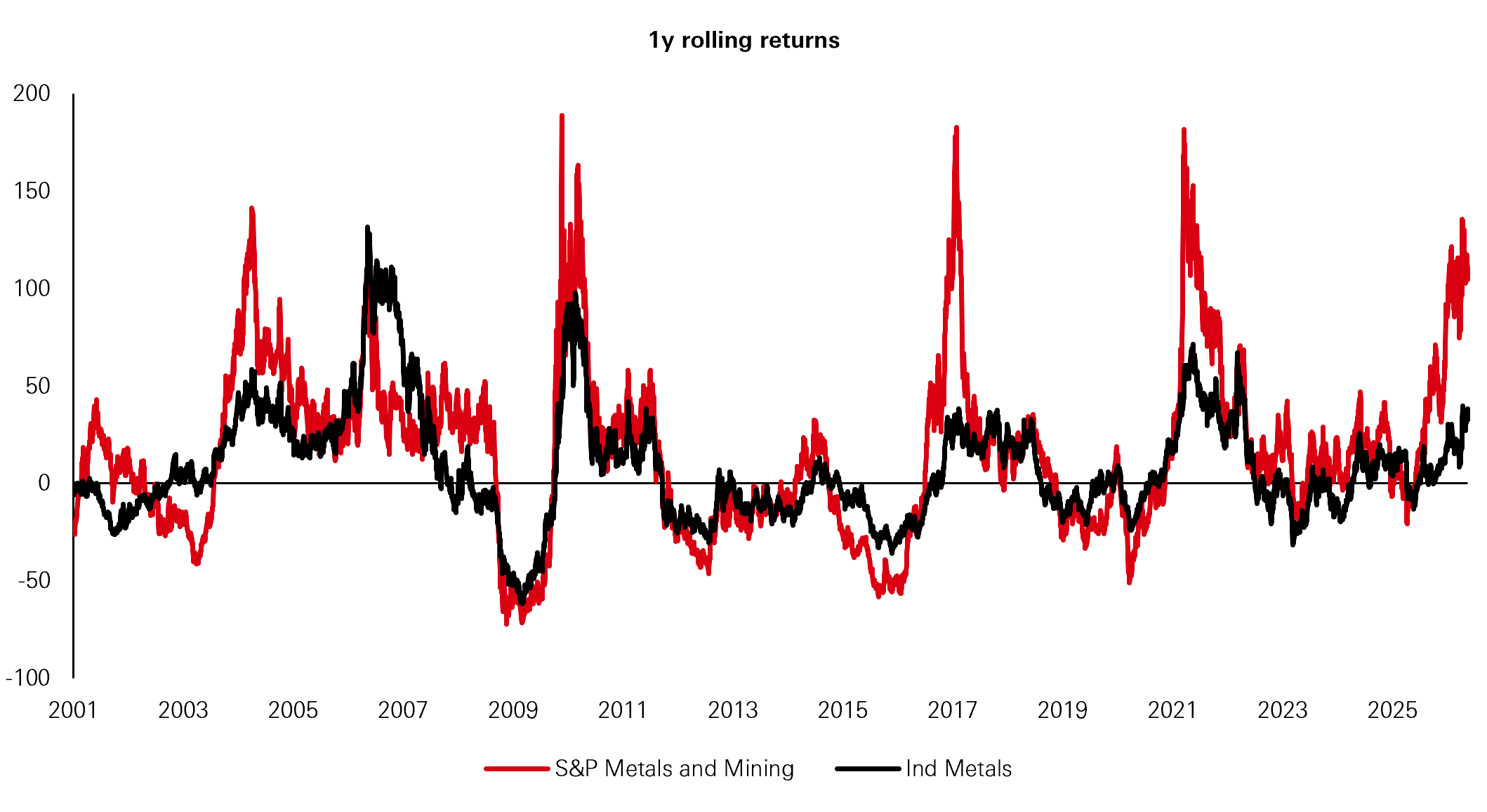
The just-in-case narrative has fed into markets. Industrial metals have neared the highs of 2022, driven mainly by copper, which has soared. This performance has translated into equities, with the S&P 500 metals and mining sector delivering over 100 per cent during the past year. Metal and mining ETFs have also participated in the rally.
Figure 5: Metal and mining stocks have benefited from stockpiling
Click the image to enlarge
Source: Bloomberg, HSBC AM, data as of May 2026.
As well as critical minerals, the most recent spikes in energy prices and the constraints in supply have seen more countries prioritise energy independence. This narrative focuses on security of supply for fuel, fertiliser inputs, and the industrial building blocks that keep economies functioning.
Despite these strong moves, there is reason to believe this narrative has further room to run in markets. The key point is that just-in-case is not a one‑off trade, it is a policy posture. Once governments and corporates internalise that resilience has value – even at the cost of efficiency – inventory, redundancy and domestic capacity stop being temporary responses and start becoming structural demand.
There is also a second‑order market effect: if stockpiling and resilience spending become persistent, the term structure of commodity markets (and therefore the attractiveness of carry strategies) can change. In other words, the just-in-case narrative can show up not only in spot prices, but in how markets price future scarcity and the cost of holding inventory.
Conclusion
Markets are not only discounting cash flows; they are discounting stories and, crucially, what they believe everyone else believes.
Gold’s recent drawdown has tested the simplistic version of the safe haven narrative, but the deeper narrative – gold as reserve diversification and geopolitical insurance – remains intact.
The dollar’s dominance is still anchored by powerful financial foundations, yet the military pillar that investors rarely price explicitly is being questioned at the margin as warfare evolves. That doesn’t end dollar hegemony, but it makes diversification narratives easier to sustain.
Finally, the shift from just-in-time to just-in-case is turning resilience into a macro factor. If that becomes common knowledge, it supports a world where commodities, real assets and strategic inventories play a larger role in portfolios and policy – another reminder that the narrative game can change the market’s map faster than it changes the territory.
Continue reading:
Energy shocks and Asian markets
For informational purposes only and should not be construed as a recommendation to invest in the specific country, product, strategy, sector or security. The views expressed above were held at the time of preparation and are subject to change without notice. Any forecast, projection or target where provided is indicative only and not guaranteed in any way. HSBC Asset Management accepts no liability for any failure to meet such forecast, projection or target.
Source: HSBC Asset Management, August 2026.
Past performance does not predict future returns. For informational purposes only and should not be construed as a recommendation to invest in the specific country, product, strategy, sector or security. The views expressed above were held at the time of preparation and are subject to change without notice. Any forecast, projection or target where provided is indicative only and not guaranteed in any way. HSBC Asset Management accepts no liability for any failure to meet such forecast, projection or target.