

HSBC active ETF strategies
ABF Hong Kong Bond Index Fund
Important Information
- The ABF Hong Kong Bond Index Fund (the 'Fund') is a passively-managed index-tracking exchange traded fund that aims to track the Markit iBoxx ABF Hong Kong Index. There is no guarantee or assurance of exact replication of the Index. The manager will not have the discretion to adapt to market changes due to the inherent investment nature of the Fund. A fall in the index will result in a similar fall in the net asset value of the Fund
- The listing of the Fund on the stock exchange in Hong Kong does not guarantee a liquid market and the Fund may be delisted. The Fund's market price on the stock exchange may be different from its net asset value per unit
- The Fund may invest in financial derivative instruments for investment purpose which may lead to higher volatility to its net asset value
- The Fund may pay dividends out of capital or gross of expenses. Dividend is not guaranteed and may result in capital erosion and reduction in net asset value
- Investing in the Fund involves substantial credit, credit rating, currency, debt securities, interest rate, valuation, sovereign debt, geographic concentration, passive investment, termination, trading, volatility and liquidity risks. In the case of turbulent market situation, investors may suffer substantial loss
- Investors should not invest solely based on factsheet and should read the offering documents for details
Why invest in Hong Kong dollar bonds?
 |
Lower exchange rate risk For local investors, the exchange rate risk is lowered by investing in Hong Kong dollar bonds as the dealing currency for these bonds is Hong Kong dollar. Investors may suffer from exchange-rate fluctuation risks if they invest in foreign currency denominated bonds, as the foreign exchange rates are bound to fluctuate against the Hong Kong dollar from time to time. |
 |
Lowering your average portfolio risk Hong Kong dollar bonds are relatively less correlated to equities. In addition, these bonds normally pay regular dividends. As such, adding bonds to your portfolio could help mitigate the volatilities of high-risk assets in your investment portfolio. |
 |
High credit quality Hong Kong dollar bonds are supported by issuers with relatively high credit quality, including the Hong Kong government and other sovereign, quasi-sovereign and supranational entities who maintain disciplined fiscal policies. This fiscal management1 contributes to the bond’s overall creditworthiness compared to regions with higher government deficits. |
Watch video
Gaining Access to Hong Kong Dollar bonds
Discover the advantages of Hong Kong dollar bonds and how they can fit into your investment strategy
Potential benefits of ABF Hong Kong Bond Index Fund

- ABF Hong Kong Bond Index Fund (stock code 2819) aims to provide investors with total returns (before fees and expenses) which correspond to the performance of the Markit iBoxx ABF Hong Kong Index2
- The index is an indicator of investment returns of a basket of high-quality credit3 issued or guaranteed by the government of Hong Kong, quasi-government and supranational entities
- As it is traded on the Hong Kong Stock Exchange, investors enjoy high transparency, easy access and relatively low transaction cost4
 |
 |
 |
Watch video
A Portfolio Manager’s View – Unlocking Investment Opportunities in Hong Kong Dollar Bonds
Fouad Mouadine, Senior Portfolio Manager at HSBC Asset Management, shares insights on how investors can benefit from investing in Hong Kong dollar bonds
A Portfolio Manager’s View – Unlocking Investment Opportunities in Hong Kong Dollar bonds
Fig. 1 ABF Hong Kong Bond Index Fund – Sector allocation as of 30 April 2026 (by weight)
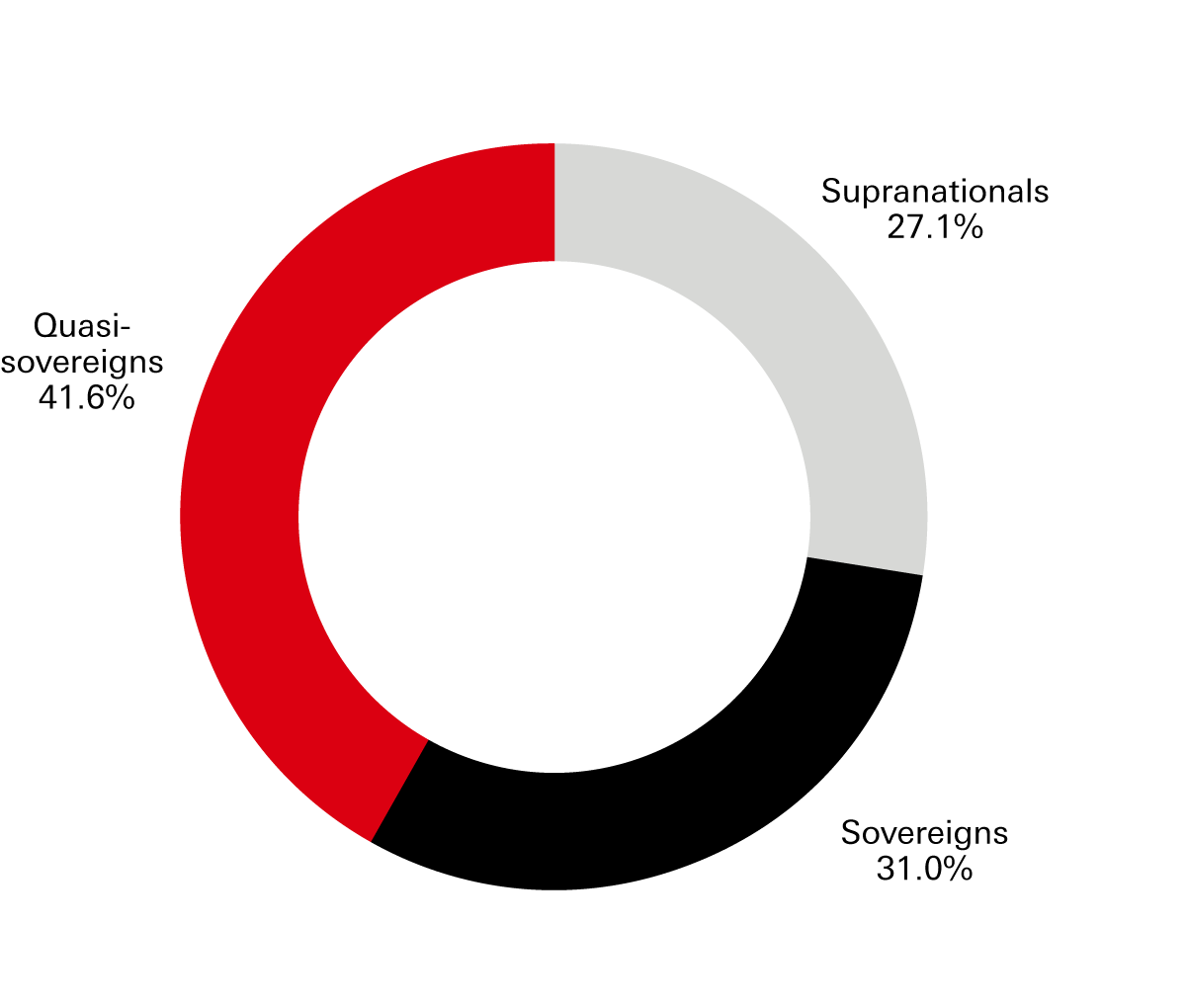
Click the image to enlarge
Fig. 2 ABF Hong Kong Bond Index Fund – Credit Rating allocation as of 30 April 2026 (by weight)

Click the image to enlarge
Source: HSBC Asset Management, data as of 30 September 2025. Allocation is as at the date indicated, may not represent current or future allocation and is subject to change without prior notice. Information for illustrative purposes only.
Learn more about ABF Hong Kong Bond Index Fund
Important notes:
1. Based on general government gross debt (percentage of GDP) 2026 data from IMF, the debt to GDP ratio for Hong Kong is 14 per cent, which is lower than many developed countries/regions including U.S.A. (128.7 per cent), Canada (113 per cent), United Kingdom (104.8 per cent) and Germany (66 per cent). Source: International Monetary Fund (IMF), 23 March 2026
2. Markit iBoxx is a registered trade mark of Markit Indices Limited (previously known as International Index Company Limited) ("Markit") and has been licensed for the use by the Manager and the Trustee. Markit does not approve, endorse or recommend the Manager, the Trustee or the Fund. The Fund is not sponsored, endorsed or sold by Markit and Markit makes no representation regarding the suitability of investing in the Fund
Investments of the Trust are made on the basis of the Markit iBoxx ABF Hong Kong Index (i.e. the Underlying Index) provided by Markit which is derived from sources considered reliable, but Markit and its employees, suppliers, subcontractors and agents (together "Markit Associates") do not guarantee the veracity, completeness or accuracy of this Prospectus or other information furnished in connection with the Trust. No representation, warranty or condition, express or implied, statutory or otherwise, as to condition, satisfactory quality, performance, or fitness for purpose are given or assumed by Markit or any of the Markit Associates in respect of the Trust or the use by any person or entity of the Trust or that data and all those representations, warranties and conditions are excluded save to the extent that such exclusion is prohibited by law.
Markit and the Markit Associates shall have no liability or responsibility to any person or entity for any loss, damages, costs, charges, expenses or other liabilities whether caused by the negligence of Markit or any of the Markit Associates or otherwise, arising in connection with the use of the Trust.
3. The credit rating of HKD bonds typically range from A to AAA. Source: HSBC Asset Management, 30 September 2025
4. As the fund is an exchanged traded fund listed on the Hong Kong stock exchange, investors enjoy convenient, low-cost access and same level of transparency comparable to investing in stocks listed on the exchange